Based On Reviews
Eco-Friendly Landscaping
Experience
Jai Jawan Jai Kisan Agriculture Society (JJJKAS) is a mission-driven social institution committed to transforming rural Bihar through structured agro-enterprise, disciplined governance, and sustainable livelihood creation. The organisation focuses on converting local agricultural strength into value-added opportunities by establishing professionally managed food-processing clusters that generate large-scale rural employment and encourage women’s participation in income-building activities.
By combining entrepreneurship, transparent systems, and community-based production models, it aims to build trusted food products while strengthening local economies. Its initiatives are designed not only to create jobs but also to develop scalable rural industrial frameworks that can be replicated across regions. With a vision to position Bihar as a recognised hub for agricultural production and food exports, the institution works to bridge the gap between rural potential and long-term economic prosperity, ensuring that growth remains inclusive, dignified, and sustainable for farming communities and emerging rural entrepreneurs.


JJJKAS continues to inspire change, demonstrating how innovation, community focus, and strategic partnerships can transform Bihar’s agriculture into a sustainable, export-driven powerhouse.

The first milestone begins with Bihar’s pickle manufacturing cluster at BIADA Bihta. Backed by a ₹60 Lakh SIDBI bridge loan and CSR support, this cluster initiates sustainable export growth.

Financial sustainability remains central. The SIDBI loan will be repaid through Tata Group CSR contributions and early export revenues, ensuring zero long-term debt and stable expansion without unnecessary financial risks.

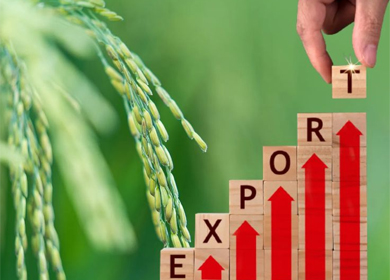
With successful exports established, operations will scale into 5–7 clusters across Bihar. Powered by a ₹15 Crore Tata Trusts grant, CSR co-funding, and government programs, this expansion strengthens Bihar globally.

Creates organised rural jobs through professionally managed agro-enterprise and production systems.

Transforms farm output into processed products that increase income stability.

Runs operations with clear governance, accountability, and disciplined institutional management.

Builds replicable rural development frameworks adaptable across regions and communities.

Strengthens local economies while promoting inclusive, dignified, and sustainable livelihoods.
The initiative is designed to generate measurable economic and social impact by strengthening rural production systems and building sustainable market linkages. By combining organised manufacturing, quality standards, and structured sales channels, the project aims to create long-term livelihood security while positioning Bihar as a reliable source of processed food products. The expected outcomes focus on employment generation, production excellence, and steady revenue growth.
Direct and indirect rural employment through cluster-based production and supply networks.
Institutional-grade hygienic food production aligned with professional quality and safety standards.
Stable revenue streams supported by partnerships with bulk institutional buyers.
Long-term retail brand development to establish Bihar’s identity in the processed food market.
Project Sampada is not just an initiative — it is a roadmap to make Bihar’s agriculture globally competitive.

Better earnings through direct access to export markets, ensuring fair prices, improved income, and long-term sustainability for rural producers.
Access to shared infrastructure, industry training, and global markets, enabling small businesses to scale and compete internationally with confidence.

A stronger, export-oriented agricultural economy that creates jobs, drives rural development, and positions the state as a global hub.
Transparent, scalable, and measurable impact through sustainable clusters, ensuring contributions directly benefit farmers, communities, and Bihar’s agricultural transformation journey.

Jai Jawan Jai Kisan Agriculture Society works to generate large-scale rural employment by building structured agro-enterprise systems that connect farming, processing, and market access. The approach focuses on creating stable local jobs, reducing migration pressures, and ensuring dignified livelihood opportunities while strengthening the rural economy through organised, professionally managed production ecosystems.

The organisation promotes women-centered participation in livelihood activities by encouraging skill development, production involvement, and enterprise engagement within rural communities. By creating accessible work opportunities and structured roles in processing clusters, it supports financial independence, social inclusion, and long-term community resilience, ensuring development benefits reach households and not just markets.
Through professionally governed agro-processing clusters, the institution aims to convert agricultural output into trusted, high-quality food products from Bihar. This model strengthens value addition, improves product credibility, and builds scalable rural industries designed to transform local potential into sustainable prosperity while positioning the region as a reliable source of processed food products.
Farmers Impacted
Jobs Created
MT per day (initially)
First export consignment
Real stories from real people—see how our work is creating impact across rural Bihar, one life at a time.


JJJKAS helped us go from a village food processor to an international exporter. Their mentorship changed our lives.

The ex-servicemen of JJJKAS are truly disciplined and visionary. Their support is practical, not bureaucratic.
Our mission is to create export-ready clusters for agricultural and food processing units through our flagship program, Project Sampada. By combining the resilience of farmers, the discipline of veterans, and the support of corporate partners, we aim to transform Bihar’s agriculture into a globally competitive force. The initiative focuses on processing, branding, and exporting products like pickles and other food items, starting with the first hub at BIADA Bihta. With professional management, quality-driven operations, and farmer-focused strategies, we are committed to building sustainable livelihoods, empowering rural entrepreneurs, and positioning Bihar as a trusted name in global food exports.
Our efforts are rooted in a clear set of principles that shape every initiative, partnership, and intervention. These guiding beliefs ensure that our work remains purposeful, inclusive, responsible, and capable of creating long-term change across Bihar’s rural economy. Each principle strengthens our mission and keeps our impact sustainable and scalable.
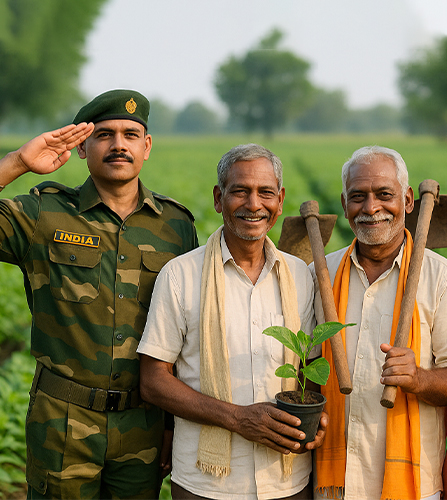
Service to Society: Driven by veteran-led discipline, integrity, and a deep commitment to public good.
Rural Empowerment: Creating meaningful opportunities for youth, women, farmers, and ex-servicemen to build secure livelihoods.
Sustainability: Promoting environmentally conscious practices through low-waste, clean, and responsible production systems.
Scalable Impact: Developing models that can be replicated widely, enabling growth across Bihar and beyond.
To create a financially sustainable rural development system that delivers dignified livelihoods, nurtures local entrepreneurship, and establishes Bihar as a recognised hub for agricultural production and exports. Moving beyond intent to real economic outcomes, the vision focuses on turning principles into measurable progress and building the missing bridge between rural potential and lasting value creation.
The consequences are significant:
Bihar does not lack agricultural output. The challenges lie in the systems around production:
Currently, most producers operate individually and informally. This makes them invisible to formal schemes, finance options, and large buyers, limiting growth opportunities.
Availability of raw materials alone does not create successful processing clusters. For such clusters to thrive, certain foundations are required:
In Bihar, these enabling institutions are either weak or absent at the grassroots level. Past attempts often fail due to:
Bihar has a rich tradition of household-level food processing, including pickles, preserves, dehydrated products, and seasonal specialties. These skills, particularly among women and rural families, are widely present.
However, without:
these products remain confined to local, informal markets, unable to reach wider audiences or generate higher value.
Large processors from outside Bihar thrive because they bring:
Local producers, despite better raw materials, cannot compete individually. This creates a structural imbalance — not a lack of effort or skill among local communities.
JJJKAS was established to bridge this institutional gap, not merely to implement isolated projects. Our approach focuses on:
We believe that sustainable value creation must happen where production occurs, and this requires patient, ethical, and structured institution-building.
Bihar’s agricultural diversity demands solutions that are:
The Patna pilot is just the beginning. Our long-term goal is to enable district-level producer institutions that can gradually transform Bihar’s role in the agricultural value chain, turning the state into a hub of finished, high-value agricultural products.
Work with us to create jobs, support entrepreneurship, and build scalable rural enterprise models that drive long-term prosperity in Bihar.